

Picture the one surface in your project that has to stop people the moment they walk in: the lobby wall, the storefront, the donor monument by the door. Specify ordinary glazing for it and it does the opposite of stopping anyone. It vanishes. That is the problem luxury architectural glass exists to solve. A wall that seems to hold frozen water, a storefront that glows like carved ice, a monument that catches the morning and hands it back changed, these are gestures, and more and more they are cut from glass rather than the flat, anonymous glazing that fills a window opening. It is luxury architectural glass, a material engineered to carry light, structure, and identity at once. Glass has been treated as an art material for two thousand years, a lineage documented in collections like the Corning Museum of Glass, and the most ambitious projects today are reconnecting architecture to that tradition rather than settling for glass as a transparent afterthought.
The word "luxury" gets attached to a lot of materials that are simply expensive. In architectural glass it means something more precise: a surface that is bespoke rather than catalogue, that performs structurally while expressing intent, and that could not be swapped for anything else without the design losing its voice. A serious architectural glass program tends to organize itself into two families, interior panels and outdoor installations, and that is how this piece is built.
.jpg)
Beyond glazing: what makes architectural glass "luxury"
Most glass in a building is infrastructure. It keeps weather out, lets daylight in, and disappears. Luxury architectural glass does the opposite. It is specified the way a sculptor specifies bronze, with decisions about thickness, texture, color, edge profile, and the way light moves through the mass. A luxury piece is usually one of one, designed around a specific wall, lobby, or facade and fabricated to suit it, so it reads as part of the architecture rather than a product dropped into it.
That custom character is the dividing line. Commodity glass comes off a specification sheet. Luxury architectural glass is developed in collaboration, the designer and the maker deciding together exactly how the surface should behave, from first concept through fabrication.
Why fused and cast glass sits at the top
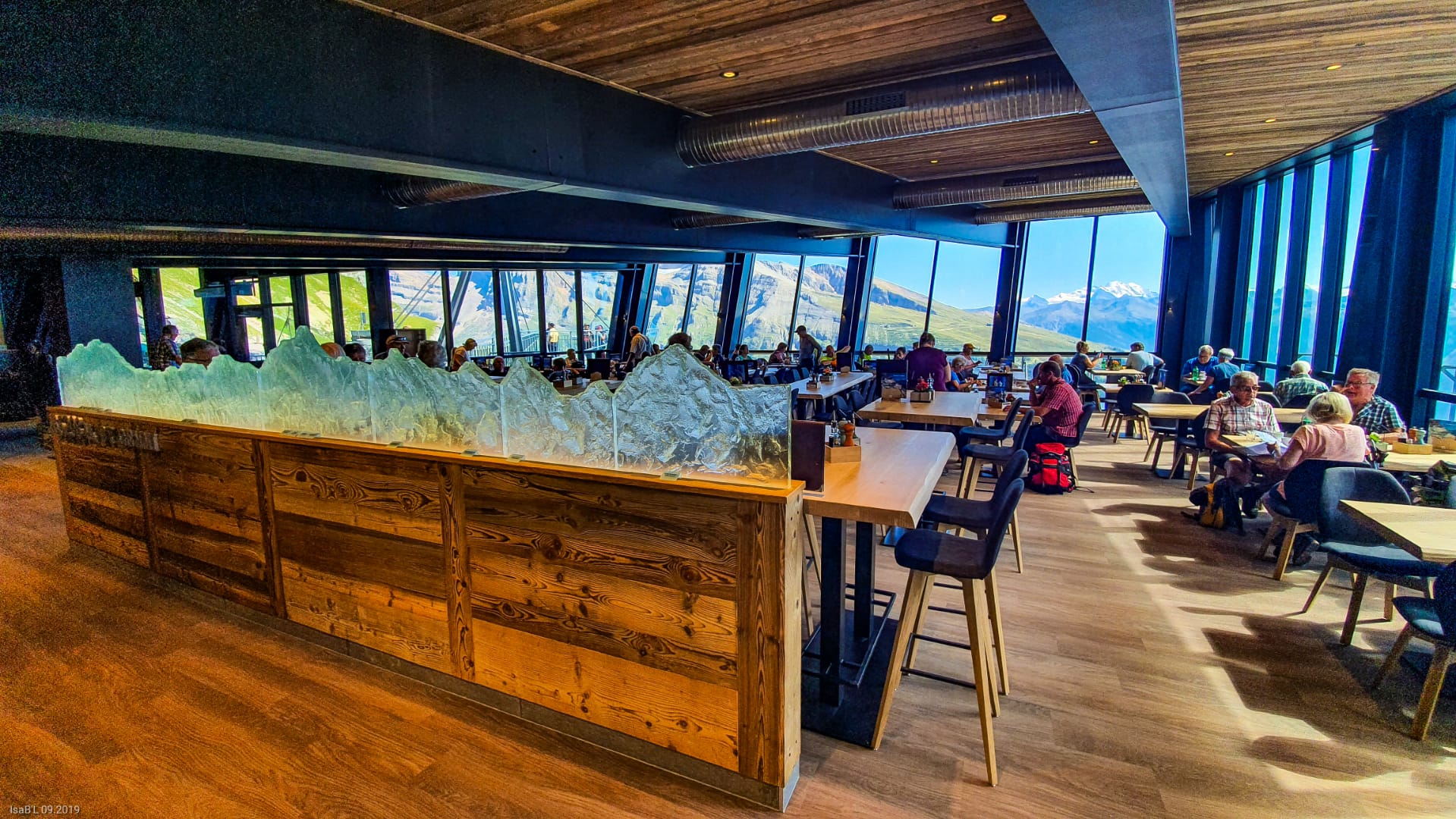
Not all architectural glass can perform at this level. Ordinary float glass is thin, perfectly uniform, and visually flat, which is what you want in a window and exactly what you do not want in a feature surface. Fused and cast glass is different in kind. Multiple layers of flat glass are kiln-fired until they melt into a single thick, monolithic mass, then annealed slowly for stability. That process unlocks the qualities luxury design depends on: real depth that plays with light, the ability to carry organic textures and relief, rich integral color, and a substantial edge that reads like cut crystal. Pushed further into thermoforming, the glass takes on deep three-dimensional form, a method we detail in our piece on fused thermoformed glass in architecture. The artistry is built into the material, not applied to its face, and the fusion process adds strength along the way.
Glass panels: light, privacy, and interior artistry
Inside a building, luxury glass shows up as panels: murals, partitions, storefronts, and feature walls that define space without closing it off. The dedicated glass panels collection ranges from precision cut-to-size tempered walls to fully artistic, light-driven installations fabricated to within a millimeter.
Feature murals that double as architecture
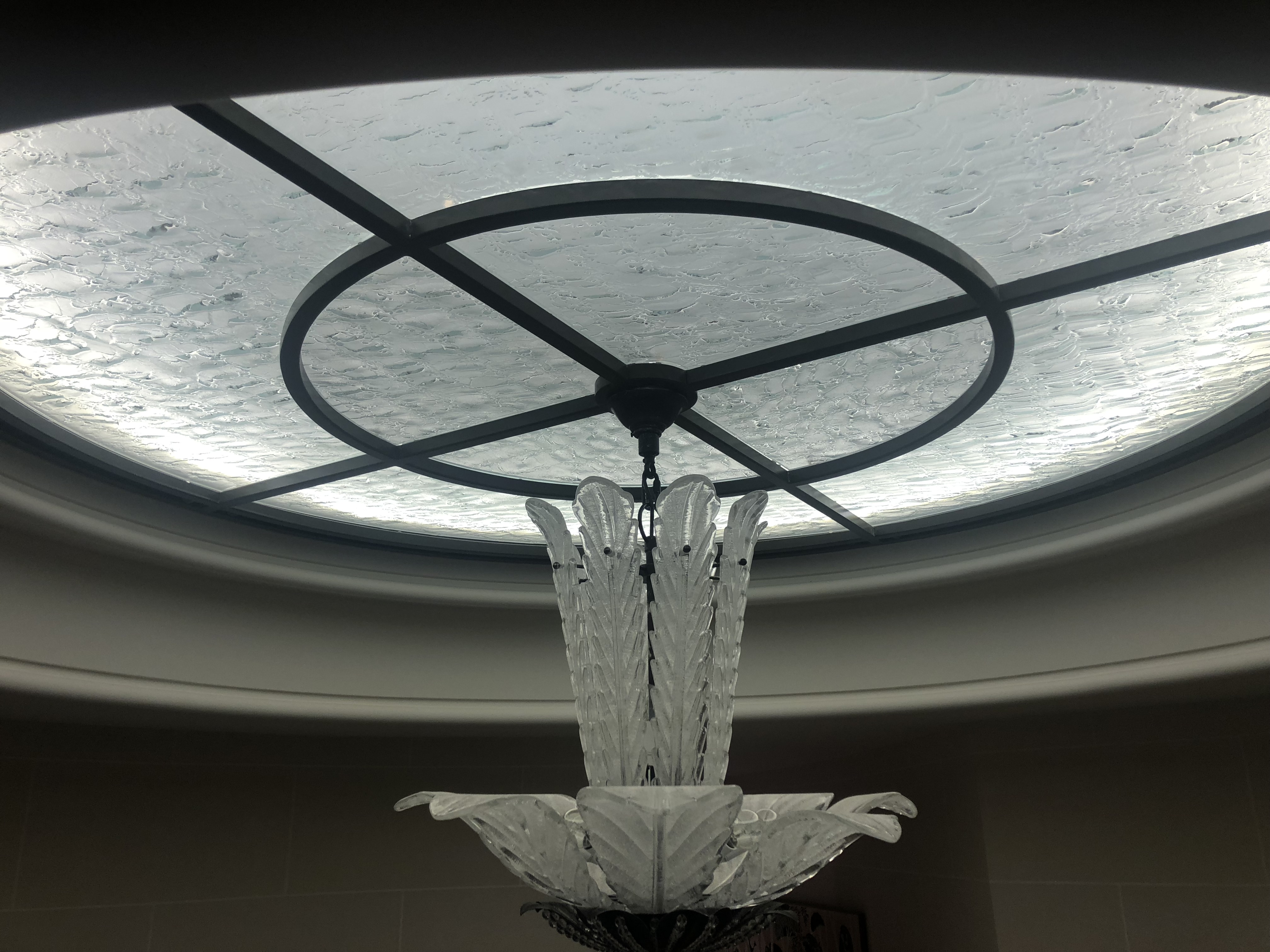
A glass mural is the clearest case of glass behaving as art and structure at once. ThinkGlass murals appear in settings as varied as the sculptural wall for Bombardier Aerospace, the artistic Mahal installation, and a glacial-toned mural at Calgary Airport that reads like a sheet of frozen light to passing travelers. In healthcare, a calming mural at the Farncombe Family Digestive Health Research Institute softens a clinical environment. At home, a backlit mural between a master bedroom and its ensuite passes light between the rooms while becoming the focal point of each. None of them disappears.
Storefronts and retail enclosures
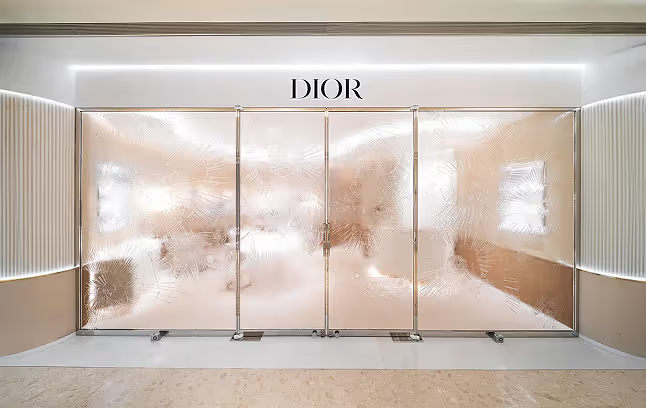
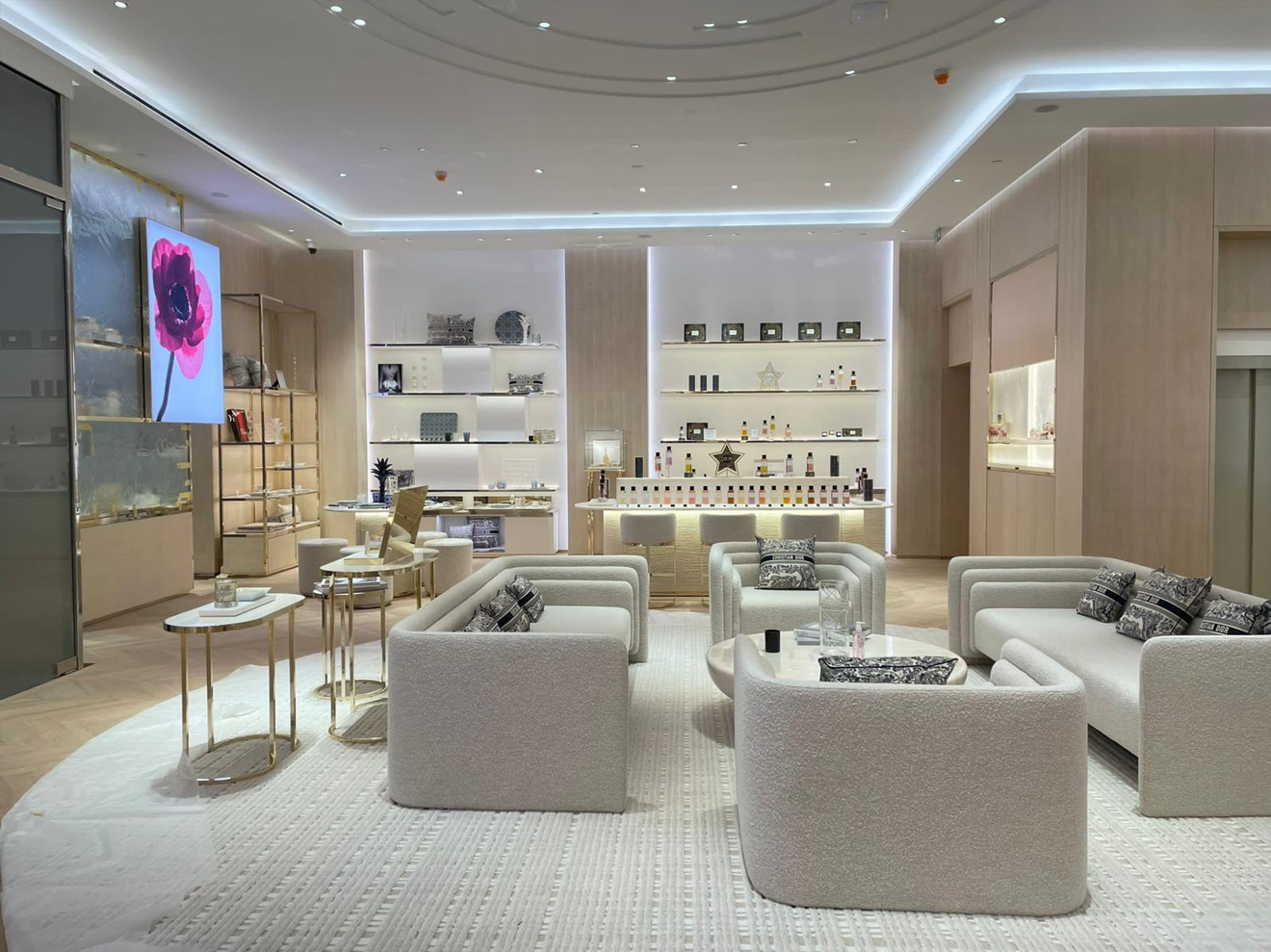
For luxury retail, the glass at the threshold is the brand's first sentence. The patterned storefront created for Dior's beauty retreat in Shanghai signals craft and exclusivity before a customer steps inside. Because the texture and pattern live inside the glass rather than printed on it, the effect survives daylight, spotlight, and the wear of a busy street, which is what high-end retail and commercial interiors demand.
Partitions, walls, and cut-to-size panels
Not every panel is a statement piece, and that is part of the luxury. The same shop produces frameless office dividers, lobby features, shower enclosures, and oversized architectural walls, in tempered, laminated, or annealed glass depending on whether the panel is load-bearing, safety-critical, or purely decorative. Clear, frosted for privacy, tinted, or sandblasted; polished, beveled, mitered, or softened at the edge. A partition can recede into the background or quietly hold a room together.
Outdoor glass: monuments, fountains, and facades that breathe light
Step outside and the stakes change. Exterior glass has to assert a building's identity from a distance while surviving wind, impact, UV, and thermal cycling. ThinkGlass outdoor architectural glass is built for that, turning entrances, plazas, and facades into landmarks.
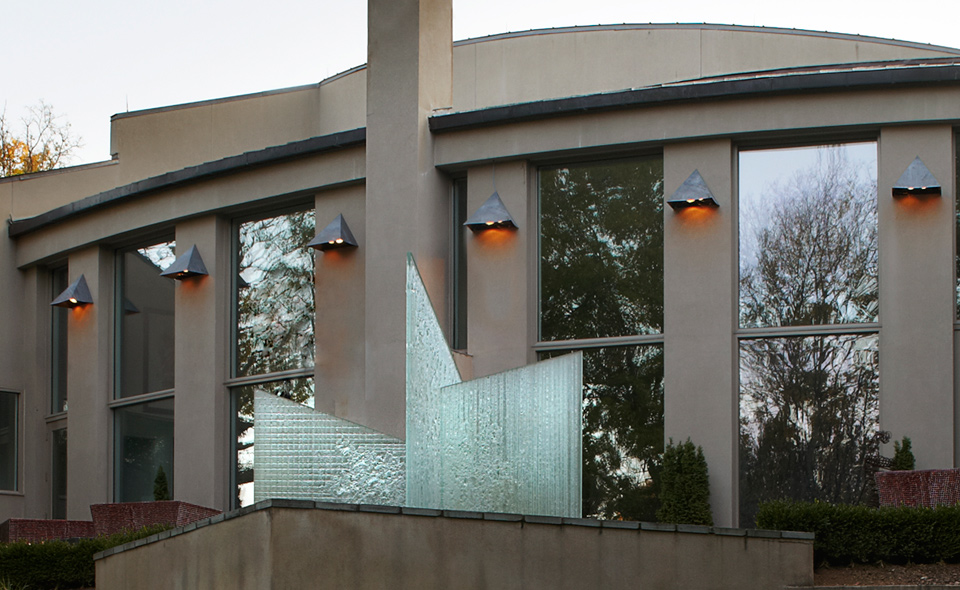
Glass monuments
A glass monument does what bronze and stone cannot: it glows. The engraved monument in Fayetteville and the landmark piece at Building One South Dearborn both use thick, luminous glass to make recognition feel contemporary and permanent at once. These are sculptural objects engineered to stand outdoors for decades without losing clarity.
Fountains and water features
Pair glass with moving water and the light gets choreographed twice, once through the glass and again across the water. The curved fountain at the Parker Hannifin Corporation building is a study in this, cast pieces shaped to guide both light and flow. Few outdoor installations are more demanding, which is why a glass water feature usually becomes the centerpiece of its plaza.
Facades and exterior identity
At the largest scale, glass becomes the face of the building. Vivid color, striking texture, intricate pattern, and sculptural form let a facade declare an institution's identity from the sidewalk, while solar control, thermal performance, and climate-specific detailing keep that statement intact through coastal humidity, mountain snow, or urban heat.
The customization palette
What makes a luxury glass program feel bespoke, across panels and outdoor work alike, is the range of variables a designer controls: organic or geometric texture; integral color from subtle tint to saturated hue; low-iron clarity for truer color; thickness and a deliberate edge; embedded LED in white or full-color RGB; and three-dimensional thermoformed relief. Every one of those choices can be tuned to a specific room, brand, or institution, so the finished surface belongs to that project and no other.
How luxury architectural glass compares
Several materials can be beautiful. Only luxury glass combines a bespoke, light-driven aesthetic with the range to appear anywhere from an intimate interior partition to a civic monument out front.
Where it belongs
Luxury architectural glass is at home wherever a space is meant to make an impression and keep it. Private residences use it for backlit murals, sculptural partitions, and floating glass staircases that turn vertical circulation into a centrepiece. Hospitality and healthcare lean on its crafted calm. Corporate and civic clients turn values into monuments, fountains, and lobby installations a visitor can stand in front of. Luxury retail lets a storefront signal exclusivity from the street. In each case the glass is not decoration added to the architecture. It is the architecture, doing the work of identity. To explore what a signature surface could do for your project, browse the ThinkGlass architectural glass collection or start a conversation with the design team about a custom piece.
Frequently asked questions
What is the difference between luxury architectural glass and regular glass?
Regular glazing is a catalogue product chosen for size and basic performance, and it is meant to be visually neutral. Luxury architectural glass is bespoke, developed for a specific space, and engineered to carry texture, color, relief, lighting, and a substantial edge. It is made to be seen and remembered.
What is the difference between architectural glass panels and outdoor glass?
Panels are the interior side of the program, murals, partitions, storefronts, and feature walls in tempered, laminated, or annealed glass. Outdoor glass covers exterior statements such as monuments, fountains, and facades, engineered to resist wind, impact, UV, and thermal cycling. Both can be fully customized; outdoor work simply carries more structural and weather demand.
Why is fused or cast glass considered higher-end than float glass?
Float glass is thin and uniform, ideal for windows but flat as a feature. Fused and cast glass is kiln-fired into a thick monolithic mass, which gives it depth, the ability to hold texture and relief, integral color, and a crystal-like edge, with better strength as a bonus.
Can lighting be built into architectural glass panels and murals?
Yes. Embedded LED systems in white or color-changing RGB turn a mural or panel into a controllable light source. Because thick cast glass diffuses light through its body and edges, the effect is luminous rather than a visible row of fixtures.